Showing posts with label Government. Show all posts

Monday, 25 June 2012

Tuesday Turd

Your weekly round up of all the loo news you never knew you needed.

Governments commit to WASH

In a week that bodes well for WASH projects, Australian PM Julia Gillard has announced additional funding for the Civil Society Water, Sanitation and Hygiene Fund, providing $97million of funding to WASH initiatives around the world.

Also this week, the US Senate Foreign Relations Committee Passed the Water for the World Act. The Act has bipartisan support in both the house and the senate, yet I can't find much info on the ol' interwebs. US politics is not my strong point, but I gather that the Act now needs the support of the House to pass into legislation. The CEOs of prominent NGOs are urging congressfolk to support the bill.

Generation ZOMG! THaT's aLOT oF WaTER!

Do you know how much water that burger you ate for lunch yesterday really used? You might be surprised. Astonished, even. Possibly flabbergasted! I sure as hell was.
Every product has litres of hidden water, used in its manufacture, transport and packaging - and to help you find out just how much, the EU has launched Generation Awake - is it trying to scare you into sensibility? Maybe. But it's also a great resource to see how your everyday choices can have a far bigger impact than you realise.


It's a gorgeous looking site - maybe a bit naff, and I wonder what actual impact it will have. Still, an excellent website for teachers looking for resource-efficiency materials.

Toilet treasure

Conservators at an ancient communal toilet oustide Paris have uncovered a rare jewel - a hairpin of the Medici Queen Catherine. I once found someone's drivers license in a toilet in a pub... maybe not quite the same.


Sayonara for now, and I hope that you find something truly wonderful in your loo this week :)


Friday, 28 November 2008

Friday Flush 28.Nov.08

Welcome back to The Bog Logger! I've been on a wee hiatus, but I'm back now with news, reviews, and the view from the loo.

Openings


There have been a few exciting toilet openings this week. First of all, the famed Charmin Restrooms have opened for the third year in New York. The 20 luxury toilets are serviced by tuxedoed-attendants after each use. Charmin is a toilet paper manufacturer in the US, and the toilets in Times Square have become quite a holiday tourist attraction.

We may not have tuxedoes, but in Australia we had the opening of the country's highest toilets on Mt Kosciusko, and I think they're really gorgeous.


It looks like they've used local rock to ensure the facility complements the surrounding landscape but without sacrificing function for form.

Residents in Peebles, UK, have decided to combine form and function by opting for single occupancy unisex toilets, believing that they are less likely to encourage anti-social behaviour. I'm not a huge fan of these toilets, but I do understand their purpose. The important thing for the people at Kingsmeadow is that they have adequate, clean facilities.


It seems that the people of Atlanta, USA, have not learned from the mistakes of Seattle and have decided to buy $300,000 apiece spaceship toilets. The comments on the article are generally not favourable to the idea. It makes no sense that councils continue to be fooled into buying those expensive monstrosities which intimidate all but the least reputable people. Portland, USA, has a much better toilet solution proposed.

This eco-toilet comes at a smaller price tag of $140,000, runs on solar energy and has panels which are easily and cheaply changed in case of vandalism. They are designed to be 'privacy-reduced' in order to discourage loitering.

And finally, in the UK, a Plymouth man is taking his very serious campaign for more toilets to the European Court of Human Rights. Eric Johns says that Plymouth used to have 67 toilets in 1984. Now, that number has dwindled to 31. The town of Devonport only has 1 toilet. The Court has accepted his initial submission and will hear his case next year.

Monday, 1 September 2008

Women and children

Bog Standard is not just a brilliant name for a campaign - it is a brilliant campaign. Launched in October 2004, Bog Standard aims to improve toilet facilities for school children in the UK, and it has brought the issue of toilets for pupils to the fore. It is headed by ERIC (Education and Resources for Improving Childhood Continence), an organisation primarily concerned with continence issues amongst young people.

Also organised by ERIC is the Water is Cool in School campaign. The adequate provision of water is a crucial element in ensuring good toilet habits, and the two campaigns are inextricably linked. Children and young people have continence and soiling problems for all sorts of reasons, but one major contributor is not drinking enough water. This can lead to a reduced bladder capacity. The Water is Cool in School campaign was launched in 2000 aiming to get drinking water out of the lavs and into the spotlight - and in this health conscious age of tackling childhood obesity it's an important campaign. It has had considerable success in changing the culture of drinking water in schools; a survey in 2003 found that many schools are now permitting or even encouraging drink bottles in the classroom.

But the ERIC team realised that they needed to look a few steps backwards; the reason some children don't drink water at school is so that they can avoid the toilets.
Bad lavs can mean anything from poor provisions, lack of privacy, dirty or vandalised facilities, accessibility issues and the presence of bullies. If children don't feel comfortable going to the toilet or feel rushed they may stop too early, not emptying their bladder completely. Or they may not go at all. Good clean toilets are key to improving toilet habits; but children also need to know that their toilets are free of bullies and smokers, that they have plenty of time and privacy to completely empty their bladder and bowels and to not feel ashamed. They need to know they can go when they need to go. I've never been shy about the toilet, but I can imagine that for some children having to ask the teacher to go to the toilet every hour must be humiliating. ERIC goes so far as to say that the lack of suitable facilities, privacy and time for children to go to the toilet is a breach of their human rights.

In Delhi, a young woman has conducted a survey which found that only 4 percent of the public toilets provided in the city are designed for use by women! From May to July 2008, Shahana Sheikh toured the slums of New Delhi counting up the toilets. As a result of her report, the Delhi High Court has directed the Municipal Corporation of Delhi (MCD) to file a status report within four weeks, regarding public toilet provision for women in slum areas.

"What is this mere talk of women empowerment and feminism worth if there is no provision of something as basic as toilet facilities for the poorest of poor women," asks Sheikh.


It seems to me that in this International Year of Sanitation, we need to particularly look at the toilet situation for women and children.

For more information, visit:

http://www.wateriscoolinschool.org.uk/

http://www.eric.org.uk/

http://www.bog-standard.org/

Friday, 22 August 2008

Friday Flush 22.08.08

Just a quick flush today cos I'm practically running out the door.

A man in Canada is in a critical condition after being hit with a toilet cistern lid. What an ignoble way to go. Wasn't there some famous general who was killed when he was struck by a roof tile? Does anyone know if that's true? I'm sure I heard it in a history lecture once upon a time.

The hunt is on for New Zealand's finest loo and entries are now open. Toilets are judged on all the usual criteria - cleanliness, signposting, appearance, amenities offered - and also, oddly, car parking.

Americans are apparently multitasking on the toilet; they're checking their emails and listening to music. 88% use at least one electronic device in the bathroom! The survey also found that women tend to spend longer in the bathroom than men. Recent efforts to curb water use in the shower has had little effect, with people spending just as much time in the shower as they did 4 years ago.

An incredible strike across all of Scotland by local government workers has disrupted many services. The strike, over set pay increases being below inflation levels, means that schools, which will be left without janitorial staff, will not open, as well as forcing the closure of art galleries, sporting facilities, cemeteries and public toilets. I encourage you to read the article, and especially the comments that follow it. You'll learn more about Scottish politics in five minutes than you ever thought possible.

And finally in this very brief flush this week, in Macedonia, government ministers who do not provide enough toilet paper for their staff could face fines of up to E1000.

Have a good weekend! I'm off to Sydney on this fine cold rainy day.

Wednesday, 20 August 2008

The positive side to losing 5 million bucks

It’s old news now, but in case you didn’t know Seattle has finally offloaded its troublesome spaceship toilets (see previous posts here and here and here).

The 5 toilets which sold for $US12,549 cost Seattle $5 million – and most articles are painting it as some spectacular failure. But the $5 million includes more than $500,000 for cancelling the contract early, as well as installation and removal costs. The city did get 4 years of (questionable) service from the facilities so the amount lost isn’t as massive as it first looks, particularly as it will be saving on future contract costs.

It’s now time to look at the positives. The old toilets cost $3.75 per use to run and used 2 to 4 times more water than an ordinary toilet. This is a real opportunity for Seattle to go green and install toilets (or ‘restrooms’ as those Americans quaintly call them) which use solar power, dual flush systems and motion sensors for lighting, like at Michigan State Park.

Now, over in New York (over? Down? Up? My US geography is shite. Is there a map here somewhere?), their spaceship toilets seem to be going along nicely. The fact that they cost 25 cents might help, as might the fact that they’re run and maintained by an advertising mob and are situated in good neighbourhoods with no other facilities. Toilets are all about location, location, location. As the hot dog vendor in the Gothamist article astutely observes, his “neighbourhood is not good for that type of thing”. Bad neighbourhoods is when good toilets go… bad.

Actually, charging a small amount for using toilets is a great idea. I’ve always been a fan, as long as the toilets are up to it. If you’re ever in Zagreb, the toilets at the train station are awesome. Sure, the woman who takes your money is surly as hell, but the toilets are clean, there’s always plenty of loo roll, and the whole experience (except for the surly woman) is really pleasant. Totally worth the 4 Kuna.

As my dad says, give someone something for nothing and they’ll treat it like it’s worth nothing.

Hopefully the man who bought the Seattle loos gets what he paid for.

Tuesday, 29 July 2008

Failure to launch

The eBay auction for Seattle's failed auto-loos has er, failed. City officials are hopeful though that an extended auction date may prove more successful.

Tardis toilet

So, the big question is, why did the spaceship toilets fail in the first place?


Toilet provision is a thorny issue with most civic councils. On the one hand, good toilets in city centres encourage tourism and shopping, keep rough sleepers from pissing in the street and give a good  impression to visitors. On the other hand, toilets are prone to vandalism, can attract criminal behaviour and are difficult to maintain in a cost-effective manner. 


How do you balance the necessary against the evil?


I believe that councils go wrong when they fall into the 'spaceship toilet' trap. These self-cleaning tardises from Germany are a favourite with councils looking to install city toilets. They appeal to council budget-watchers because although they have a high set-up cost, they are supposed to have minimal upkeep costs. But the fact is that after a short while self-cleaning toilets don't. Then you're left with a room the size of 3 toilets in which only one person can relieve themselves every 15 minutes.


Wellington City Council (New Zealand) has a brilliant set of public toilets, on the corner of Lambton Quay and Featherston Street. There are 6 toilets arranged in a semi-circle and a room in which a toilet attendant sits. The attendant keeps the queue moving, mops the floors, keeps each cubicle in paper and provides general chit chat.


For many councils, taking the human element out of toilets seems to be the best option, but I think they are letting their squeamishness override their common sense. They believe that a toilet attendant is a demeaning job and they're not willing to create it. But there are people who are good at it, just like any other job. The best toilet attendants are like good taxi or bus drivers. They're proud of the facilities they offer, they welcome you aboard and they're pleased to take you to your destination. In other words, they are professional.


The stigma attached to the profession of toilet attendant must end if councils are to provide good clean facilities they can be proud of.


The location of public toilets is also key. The middle of a park is always going to attract criminal behaviour. The middle of a shopping district - not behind the carpark, or hidden away down an alley - is the best location. Toilets must take up excellent real estate if they are to be excellent. At the same time, there must also be decent simple provision outside of the main shopping area for people who are making their way home or for people who have no home. But the facilities must still be on good real estate.


To ignore the human element in city centre public toilets is to commit a fatal flaw. Toilets ARE human. Expensive machines which make the human element disappear fail. Seattle has paid the price, but has it learned the lesson?

Tuesday, 15 July 2008

Ebay for spaceship toilets

I hate, loathe and despise spaceship toilets, and Seattle residents apparently feel the same way. They're getting rid of 5 of the expensive behemoths which have been in central city locations since 2004, but keeping the $2.59 tax which was introduced to pay for them.


The toilets, purchased from a German company, proved extremely unpopular with locals. The contract for the $6.6million toilets has been ended early after they became a magnet for drugs and prostitution. The self-cleaning machines, after a while, didn't. Instead of saving money on cleaning the facilities the Council had to employ cleaners. At the initial consultation, the toilets were supposed to be a cost-effective solution, but at $360 per toilet per day they are anything but.


As well as being expensive, space inefficient drug dungeons, I personally find these toilets terrifying. When they installed one in Newcastle (Australia) I would piss next to it rather than go in (much to the amusement of the bouncers at the Crown and Anchor). What if it started 'self-cleaning' while you were in it? *shudder* Nope, a squat by the wall it was. Hey, I'm a classy girl.


The Council is now hoping to sell the unsuccessful toilets on eBay. I'll post the link as soon as there is one.


Mark Harrison - The Seattle Times

Thursday, 3 July 2008

Sulabh liberates 60,000 scavengers, tots up $32 mn revenue: UNDP

Sulabh International is the reason I became interested in all things
toilety. Its good work has been highlighted in a UN report this week.
the story below is from www.mangalorean.com


---------- Forwarded message ----------
New Delhi, July 1 (IANS) Sulabh International, a 38-year-old movement
promoting low-cost safe sanitation in the country, has liberated over
60,000 scavengers, a report by the United Nations Development
Programme (UNDP) released Tuesday said.

The report, focusing on the various strategies adopted across the
world to engage the poor, additionally said Sulabh's revenues reached
$32 million in 2005, with approximately $5 million in surplus.

Sulabh maintains 6,500 public pay per-use toilets and by 2006, had
installed 1.4 million household toilets. An estimated 10 million
people used its facilities across the country, the report said.

"The public toilets run by Sulabh break even within eight to nine
months," it added. "Facilities in prominent places were highly
profitable."

There is ample scope for replication and even scaling up of the Sulabh
model that its founder Bindheshwar Pathak started in 1970, UNDP said.

"State governments that used to invite Sulabh into single-party
tenders have now started inviting competitive bids to build and run
public toilets," it noted.

The UNDP report noted that while it was officially said in 2003 that
India had 676,000 scavengers - people, mainly women, who eke out a
living lifting human excreta - unofficial estimates peg the figure at
1.2 million.

Of them, Sulabh had liberated 60,000 through various skill development
and adult literacy programmes; for instance, it trains women in food
processing and markets their products.

It has successfully used internal and external resources to start an
English medium school and a variety of business incubators targeted at
the erstwhile scavengers to get them accepted in mainstream society,
the report said.

Sulabh, which employs over 50,000 associates and presently operates in
26 states, also trained 19,000 masons who could build low-cost,
twin-pit toilets using locally available materials, UNDP said.

Focusing on the constraints Sulabh faced when it started off, the
report identified three key hurdles.

First, there was a lack of market information: businesses just did not
know whether poor people would pay to use toilets and related
facilities or install toilets.

Second, there existed an acute lack of widespread knowledge on
propagating low-cost hygiene solutions.

And finally, perhaps the most critical factor: the poor did not have
access to finance to provide for sanitation.

The report then highlights the strategies Sulabh adopted to overcome
these obstacles.

It first developed an initial pilot project and demonstrated the
popularity of pay-per-use toilet facilities in urban Bihar and
pioneered the low-cost toilet model to be installed in poor
residential areas.

Next, it constructed a museum and planned for a sanitation university,
took its own designs and trained other non-governmental organisations
(NGOs), and started policy dialogue with governments.

"Sulabh influenced the central government and over 100,000 public
toilets will be constructed in addition to local government's
provision of toilet-related loans and subsidies," the report said.

IANS

This News is featured in Mangalorean.com
www.Mangalorean.com

Wednesday, 23 April 2008

Oh, the humanity!

I might be a lefty leaning pinko greenie, etc, but surely I'm not alone in thinking that toilet paper is a basic human right? Well, not in Montgomery County, Maryland USA it's not.

United Food & Commercial Workers (UFCW) which represents about 8000 government employees has released a memo with cost-cutting measures and it suggests, among other things, restricting the amount of toilet paper issued to inmates of jails.

The county spends ‘‘hundreds of thousands of dollars” annually to repair plumbing because inmates use it [toilet paper] to clog their toilets.

Issuing a maximum of three rolls a week to each inmate would avoid some of those costs.

Read the full article here.

I can just imagine the black market in Montgomery County jails: smack, cigarettes and bog roll. They'll have to get their mules to smuggle it in one sheet at a time so as to avoid detection.

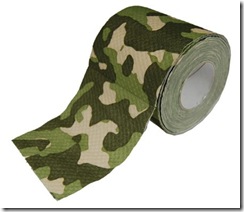
http://www.baronbob.com/camouflage-toiletpaper.htm

Wednesday, 16 April 2008

Misquote of the week

"I'm campaigning on the fact we have managed to get policies adopted such as the community toilet scheme... I hope I will hold on to my seat."


Hertsmere Labour group leader, Ann Harrison


http://www.borehamwoodtimes.co.uk/display.var.2198628.0.0.php

Saturday, 5 April 2008

What's normal?

I received a bookmark in the post on Friday for the new Australian Government website dedicated to bladder and bowel health www.bladderbowel.gov.au.


www.bladderbowel.gov.auThe new website is part of the National Continence Management Strategy and builds on the success of the National Toilet map. I love the Toilet Map. There are a number of toilet map initiatives on the web, such as the Bathroom Diaries, and Public Toilets dot org, but the Toilet Map is the only government funded map of its kind. Because it has funding, it's very comprehensive (although the Find by Points of Interest section didn't recognise the Sydney Opera House as a location. Hmm....)


The Bladder Bowel website has a wonderful section about 'what is normal'. Did you know that your small bowel is 6 metres long?? I didn't even know I had a 'large' bowel and a 'small' bowel!


How your bowel works

The bowel is the lower part of your food digestive system. It connects your stomach to your back passage, where waste materials (called bowel motions or faeces) are passed out of your body. The job of the bowel is to finish digesting food by taking up water and nutrients.

Your bowel has three linked parts:

  • Small bowel - mainly takes up goodness (nutrients) from broken-down food;
  • Colon - mainly takes up water as digested food passes through;
  • Rectum - stores waste material until it is passed through the back passage.

The small bowel is about 6 metres long. The large bowel, the name for the colon and rectum together, is a tube about 1.5 metres long. The small bowel is called 'small' because it is narrower than the large bowel even though it is longer.

Everybody has different bowel habits. Some of us empty our bowel 3 times a day. Others may empty their bowel 3 times a week. Normally each bowel movement should take a minute or so. At the end of a bowel movement you should feel empty.


I like that my bowel connects my stomach to my back passage. I like the idea of having a 'back passage'. It makes me sound like an Edwardian country house.


Thanks for sending through the bookmark, Stevie! I'll use it in "Clean and Decent" a book about the history of toilets and bathrooms that I'm currently reading. Review up here soon!

Monday, 10 March 2008

Low income loo bonus

Low income residents in Seattle can look forward to making some real savings with the launch of a scheme by Seattle Public Utilities to provide free efficient toilets.

Read the story here

The toilets can save more than $100 a year in bills.

Back when I was a really poor student, my local council had a similar initiative. A very friendly man came around to my dodgy flat and gave me two free energy-efficient lightbulbs, changed my shower head to a water-efficient model and even checked to see how efficient my toilet was. It wasn't very, so he put some sort of brick in it to lessen the amount of water it used.

I don't know if I had any very noticeable reductions in my bills, but it was a great idea. The best thing was, it was free. I could never have afforded to make those sorts of money saving changes. It's the same old lament: you need money to save money.

Friday, 7 March 2008

Stirring the Pot

You'd have to have been hiding under your toilet to have missed the news out of the UK this week of a national government guideline on public toilets.

Communities Minister Baroness Andrews unveiled the guidelines today, admitting that "some people may find the whole idea of a strategic guide on public toilets funny".

The guidelines basically endorse the clever innovations of Westminster and Richmond upon Thames councils, including the SatLav and community toilet schemes.

The Conservatives half-heartedly attacked the report, claiming it endorses the closing of free public toilets, and leaves those already disadvantaged by loo loss even worse off. They also throw in a rather snarky jab about the Prime Minister's 'hypocrisy' in having the gents toilets in the "First Lord's Residence" refurbished at tax-payers expense. It seems reasonable to me that the state should expect to refurbish the Prime Minister's office loos on occasion; they are a work environment just as any other. But I can't blame them for succumbing to the temptation of making the comparison.

I think the community toilet scheme is a great idea, because it's so human. I tend to dislike other solutions, such as spaceship toilets, because they attempt to mechanise an animal action, which I think makes the whole thing seem dirty. However, there are fundamental flaws with the community toilet scheme. The key is in the word 'community' - the scheme relies on people to work together in a social way. There are great publicans who realise that 'very normal people' get caught out when they're out. But there are plenty who follow the 'it will lead to trouble' line, and who rant about the 'young people' who will abuse the system. From the Whitehaven News:

The landlady of The Anchor Vaults, Janice Burns, agrees that opening the toilets to non-customers would be an opportunity for youths to misuse and vandalise the toilets. Consequently, she would not go ahead with the idea, even if offered government money.

The main people advocating the community toilet scheme are from groups concerned with bladder conditions, old people and people with small children; I couldn't care less about any of those people. I feel that 'community' schemes like this fail because they ignore the needs of young people and public drunks, who are, apparently unfortunately, part of the community. Well, young people and public drunks need to piss too, and I suspect that if you make them feel unwelcome in 'community' toilets they very well may start vandalising them.

(I'm reminded of a time I was told I couldn't use the public toilet in a KFC in Sydney - I walked round to the staff carpark at the back and pissed on the nicest car there. And I'd only had a few beers.)

The SatLav, meanwhile, is very clever. I haven't investigated it yet, but I wonder if it's very useful at 2 in the morning?

All in all, I'm very impressed with the guidelines. 24dash is right when it says that it is the first of its kind. I've seen reports come out about the state of toilets in third world countries, but a national toilet strategy for a wealthy nation is unheard of. The only thing close is the Australian toilet map, which is government sponsored. I wonder if these 'guidelines' are a precursor to a more robust document?

Friday, 1 February 2008

Spaceships, Toilets & Tycoons

I was absolutely stoked to discover that there's a Toilet Tycoon. Well, not quite. Louis Herrera is a self-proclaimed toilet expert. He is also the president of Public Facilities and Services, a company looking to sell amazing self cleaning, polite, music playing toilet contraptions at amazing prices to less than cluey US city councils.

I have major problems with robotic restrooms. I tried using one once in Newcastle, NSW Australia, and found the experience so horrible I wouldn't try one again. Automated toilets are unnaturally cavernous rooms in which you feel like you are being watched. I was worried that when I flushed, the room would start its self clean mode while I was still in it. There's also the problem of locking. I simply don't trust a "lock" that is merely a button. I want to have some physical control over the locking mechanism of my toilet. And I certainly don't want my toilet to have the ability to override the lock and open the door after a designated time. The whole thing just isn't... civilised.

These automated public conveniences are turning up all over the US and are already in place in cities in Europe and Australia. At $US250,000 a pop, they're not cheap, which I could forgive if in being automatic they made cost efficiencies in yearly upkeep. But they're still about $US30,000 a year to maintain. Installing a 'normal' public toilet would cost about half this to install (and would have more cubicles)

In Portland Oregon, USA, City Hall opened its ground floor toilets at nighttime for the use of homeless people. The trial will cost about $US111,600 for one year, and while people might complain about the inordinate cost considering the number of users (the same amount of money could buy a "coffee and a bagel at Bentos Coffee and Cookies, across from City Hall, for 50 people a day") I think that this still represents a thoughtful community response. Spaceship toilets are simply unappealing, and they turn the act of relieving oneself into an awkward sanitised experience.

One opponent of the City Hall toilet scheme, Commissioner Randy Leonard, (who opposes it based on its location) has another idea: he'll be building some of those spaceship toilets for himself. He also found the $US250,000 price tag just a little too coarse to swallow. His plan is to build the toilets at a reduced cost, even getting down to "ten grand a pop". That's such a remarkable difference from the price the Herrera mob are quoting that I wonder if its feasible. However, if there's anything I've learned about local government it's that anything is possible. And Leonard thinks that if they perfect their "ten grand a pop" toilets, they'll be able to sell them on to other councils. I surely hope so; you're not quite a tycoon if the local council has more power than you.